I've let this blog lag. I haven't wanted to, but so much has been happening. And sometimes you can't juggle it all... for your own well-being. :)
But I will work my way back to this. Even when I'm not writing about it, I'll still be reading and learning. This is too important. I know too many people with health issues. And I want to share with them what I've learned so they can make their own choices and find their own path to well-being.
Through the end of this year memos here will most likely be in random intervals, but I am not giving up.
©2011 Memo To My Health. Please do not republish our content without notifying us and getting permission.
Tuesday, November 15, 2011

Tuesday, September 27, 2011
Salt, Sodium and a Sidetrack on Sugar
Another reason to cut back on (or out) highly processed foods... Another reason to read labels... Another reason to be a conscious eater...
NPR's new food blog, The Salt, has an article on Why Skipping Salt is So Hard to Do. It mentions how most people know that too much sodium in your diet is a bad thing, (Do they? I hope so. It's most commonly associated with high blood pressure.) but that salt is pretty much inherent in fast foods and processed foods. It's used to flavor and preserve and the chances that that will change are low because 1) people don't like when you change the flavor of something they're used to and 2) it's a cheaper way of producing.
Something important to note (although the article notes it as a "Geek note") is that sodium is technically a component of table salt so they aren't the exact same thing even though people usually use the terms interchangeably when they talk about diet. (Because, you know, this whole keeping an eye out for yourself and knowing what's what isn't complicated enough... when you pour salt on something, 40% of what you pour is really what you should be keeping track of not having too much of...)
The article states sodium "accounts for about 40 percent of the salt we consume. We need a minimum of 1,500mg of sodium a day, but most Americans get about three times that amount." (They're getting that info from Colorado State University.) That's right. It's something that you're supposed to not get too little of or too much of. You need it to maintain the water balance in your cells. It's also used by muscles and nerves.
The food blog article suggests cutting sodium out of your diet and they gradually adding it back in to reduce your overall intake, giving the example that consumers who cut it out for three weeks don't want to go back to the regular salty foods. But wait, your body needs sodium, right? Right. And sodium is already naturally in many foods. So you're not really going cold turkey from all sodium - just products that have added sodium. (The article should probably explain that a bit better.)
But this idea that you can retain your palate has merit. I've found that cutting sugar out of my diet for a couple weeks (full disclosure: the first few days were not easy) and then slowly letting it back in did retrain my palate in terms of sugar. When I start eating something that has a large sugar component, I can taste it immediately without knowing the ingredients or reading a label... and it's sort of gross. I used to think too sugary was an imaginary concept - not any more. Now I easily eat less sugar on a regular basis and feel like I have more energy - definitely not missing it.
Back to the salt and sodium... if you get back to eating those foods with the added sodium it's still easy to get confused while reading labels, even with the aforementioned knowledge. The food blog article cites an example where a soup company advertised a line of soup with 25% less sodium, but it turned out it had the same amount as their other lines. Another way you could get turned around is reading a ingredients list. Salt is not the only ingredient that can up the sodium content of a processed food.
For that, I recommend going over the Colorado State fact sheet I linked to earlier. They discuss sodium labeling - giving a heads up for a couple other ingredients that will add sodium and breaking down what some marketing-type terms usually mean for sodium content (ex: "Sodium free" = less than 5 mg per serving) "Sodium free" does not equal "No sodium". On top of this cornucopia of info, they have suggestions on what you can season foods with other than salt, dependent on the food. I've seen people salt their food without even tasting it first - even when their meal includes foods that came from a can (aka already a bunch of sodium).
A little less than halfway through the page they also have a nice chart that compares sodium amounts in related foods/food products. For instance, an apple has a little naturally-occurring sodium. Applesauce usually has around 3 times as much, but it's still a low amount. A frozen apple pie has over 100 times as much sodium as an apple and a fast food apple pie has a high amount of sodium - around 200 times as much as that apple. They also have a corn example I think is important to note. Frozen corn has more sodium than fresh, but canned has a lot more than both. (So cut back on your cans when you can. :p )
©2011 Memo To My Health. Please do not republish our content without notifying us and getting permission.
 |
| image from Garitzko on wikimedia commons |
Something important to note (although the article notes it as a "Geek note") is that sodium is technically a component of table salt so they aren't the exact same thing even though people usually use the terms interchangeably when they talk about diet. (Because, you know, this whole keeping an eye out for yourself and knowing what's what isn't complicated enough... when you pour salt on something, 40% of what you pour is really what you should be keeping track of not having too much of...)
The article states sodium "accounts for about 40 percent of the salt we consume. We need a minimum of 1,500mg of sodium a day, but most Americans get about three times that amount." (They're getting that info from Colorado State University.) That's right. It's something that you're supposed to not get too little of or too much of. You need it to maintain the water balance in your cells. It's also used by muscles and nerves.
The food blog article suggests cutting sodium out of your diet and they gradually adding it back in to reduce your overall intake, giving the example that consumers who cut it out for three weeks don't want to go back to the regular salty foods. But wait, your body needs sodium, right? Right. And sodium is already naturally in many foods. So you're not really going cold turkey from all sodium - just products that have added sodium. (The article should probably explain that a bit better.)
But this idea that you can retain your palate has merit. I've found that cutting sugar out of my diet for a couple weeks (full disclosure: the first few days were not easy) and then slowly letting it back in did retrain my palate in terms of sugar. When I start eating something that has a large sugar component, I can taste it immediately without knowing the ingredients or reading a label... and it's sort of gross. I used to think too sugary was an imaginary concept - not any more. Now I easily eat less sugar on a regular basis and feel like I have more energy - definitely not missing it.
Back to the salt and sodium... if you get back to eating those foods with the added sodium it's still easy to get confused while reading labels, even with the aforementioned knowledge. The food blog article cites an example where a soup company advertised a line of soup with 25% less sodium, but it turned out it had the same amount as their other lines. Another way you could get turned around is reading a ingredients list. Salt is not the only ingredient that can up the sodium content of a processed food.
For that, I recommend going over the Colorado State fact sheet I linked to earlier. They discuss sodium labeling - giving a heads up for a couple other ingredients that will add sodium and breaking down what some marketing-type terms usually mean for sodium content (ex: "Sodium free" = less than 5 mg per serving) "Sodium free" does not equal "No sodium". On top of this cornucopia of info, they have suggestions on what you can season foods with other than salt, dependent on the food. I've seen people salt their food without even tasting it first - even when their meal includes foods that came from a can (aka already a bunch of sodium).
A little less than halfway through the page they also have a nice chart that compares sodium amounts in related foods/food products. For instance, an apple has a little naturally-occurring sodium. Applesauce usually has around 3 times as much, but it's still a low amount. A frozen apple pie has over 100 times as much sodium as an apple and a fast food apple pie has a high amount of sodium - around 200 times as much as that apple. They also have a corn example I think is important to note. Frozen corn has more sodium than fresh, but canned has a lot more than both. (So cut back on your cans when you can. :p )
©2011 Memo To My Health. Please do not republish our content without notifying us and getting permission.
Tuesday, September 13, 2011
The Opposite of What He Was Going For
So I was reading this article about Nestle's Chairman of the Board attacking organic food (Here's Why Nestle Chairman's Attacks On Organic Food Are Wrong), and my first thought was to wonder why a processed food company would feel the need to attack organic food. As the article mentions their profits tripled from 2009 to 2010... so they don't seem to be hurting. All I can come up with is that they're doing pre-emptive threat management.
After getting past that notion I wanted to know what the actual arguments were. One was that "From a nutritional point of view studies show no nutritional difference from bio [or organic] to other food." It's been a bit since I read those studies but I'm pretty sure they were comparing organic produce to conventional produce... not to Haagen-Dazs. Regardless, people who condemn organic food based on those studies are missing the point. Organic food is not about giving you something extra, it's about not giving you something–namely chemicals to ingest.
Now lately I've been all about touting how you don't have to buy all your produce organic. Organics are often more expensive than conventional so knowing which items have exteriors that protect the part you eat from pesticides/hormones/antibiotics can save you some money. This article reminded me, though, that there are environmental benefits to buying organics as well. (You can read the article with the link near the top of the post to find out what some of those are.) I'd put those on the back burner of my brain.
I'll try to keep them more at the forefront now and do the whole voting with my dollars thing. Remember when you buy in season, produce is also cheaper. Next time I'm in the store I'll keep an eye out for in season organics and it should still be reasonable. Often times doing what's best for the environment, is also good for you too. This is one of those times.
So thanks for reminding me, Anna Lappé. You too, Nestle Chairman. Oh that wasn't the effect you were going for? Whoops. :)
©2011 Memo To My Health. Please do not republish our content without notifying us and getting permission.
After getting past that notion I wanted to know what the actual arguments were. One was that "From a nutritional point of view studies show no nutritional difference from bio [or organic] to other food." It's been a bit since I read those studies but I'm pretty sure they were comparing organic produce to conventional produce... not to Haagen-Dazs. Regardless, people who condemn organic food based on those studies are missing the point. Organic food is not about giving you something extra, it's about not giving you something–namely chemicals to ingest.
 |
| image from Scott Bauer via Wikimedia Commons |
I'll try to keep them more at the forefront now and do the whole voting with my dollars thing. Remember when you buy in season, produce is also cheaper. Next time I'm in the store I'll keep an eye out for in season organics and it should still be reasonable. Often times doing what's best for the environment, is also good for you too. This is one of those times.
So thanks for reminding me, Anna Lappé. You too, Nestle Chairman. Oh that wasn't the effect you were going for? Whoops. :)
©2011 Memo To My Health. Please do not republish our content without notifying us and getting permission.
Thursday, September 1, 2011
Seasonal Eating: Fall
I know for so many places it doesn't feel like fall yet, but the season is changing for our foods. Foods that are seasonal in the North American autumn (September-November) include:
.jpg/800px-Psidium_guajava_(fruit).jpg) |
| The fruit on the right is ripe. guava image from Hans Hillewaert on wikimedia commons |
- Apples
- Broccoli
- Butternut Squash
- Cauliflower
- Cranberries
- Ginger
- Grapes
- Guava
- Mushrooms
- Passion Fruit
- Pear
- Pineapple
- Pomegranate
- Pumpkin
- Sweet Potatoes
- Turnips
As usual, these foods will be of better quality than others you'll see on the shelves and more reasonably priced. Eat the Seasons also has a list updated week by week based on your location Canada/USA or UK/Ireland. Whole Foods also has a nice little article on their blog about what is in season in their stores in September.
©2011 Memo To My Health. Please do not republish our content without notifying us and getting permission.
©2011 Memo To My Health. Please do not republish our content without notifying us and getting permission.
Tuesday, August 23, 2011
Second Chance Foods
So last week I listed foods that I once thought I couldn't live without. In part two, I've made a list of foods that I tried for the first time or gave a second chance to in the past ten years and found that I now like them.
 |
| image from cyclonebill on wikimedia commons |
- hummus
- artichoke
- edamame
- tilapia
- salmon
- sweet peppers
- asparagus (tolerate)
- mushrooms
- blueberries
- raspberries
- blackberries
- tofu
- kalamata olives
- dark chocolate
There's probably more that I just haven't thought about yet, but I think this is a testament to giving new foods a try or old foods a second try, because your tastes can change. Plus every food on this list has nutritional benefits... you just don't want to eat tooooo much of the last one.
©2011 Memo To My Health. Please do not republish our content without notifying us and getting permission.
Tuesday, August 16, 2011
Living With Less of the Food I Thought I Couldn't Live Without
This one will be a two parter. I decided to make lists of foods my relationship with which my relationship has changed over roughly the past ten years. This first list is foods I used to think I would never stop eating but have now either completely cut out or severely reduced in my regular eating.
©2011 Memo To My Health. Please do not republish our content without notifying us and getting permission.
 |
| image from Wikimedia Commons |
- sour cream
- butter
- cream cheese
- mayo
- regular (cow milk-based) ice cream
- cheese on a daily basis
- beef
- sugar
- salad dressings
©2011 Memo To My Health. Please do not republish our content without notifying us and getting permission.
Thursday, August 11, 2011
Happy Meals Get Appley
If you haven't heard, several days ago fast-food chain McDonalds announced that they were cutting back on the amount of fries offered in their Happy Meals and adding apples starting this September.
A couple days later on the radio news quiz show, Wait Wait Don't Tell Me, they joked that it's a great way to show your kids how much better fries taste than apples.
While that joke will probably be true for some people, it feels like McDonalds may be taking a step in the right direction. Recently they had been offering apples as an option in the meals, but you had to ask for them. And then when you got them they served them with caramel dipping sauce. I don't know the nutritional specifics on the fries/caramel sauce comparison, but I have a feeling it was negligible. Plus WebMD reports that only 11% of Happy Meal purchasers chose the apples with the sauce.
Now the apples will be naked and you can even have two packages and no fries (although again you have to know to ask). I have to wonder, though, how many of those apple packages will end up in the garbage. I'd hope not a lot but there are many stubborn kids out there.
But this whole thing isn't as simple as just a step in the right direction. You also have to wonder if it's a big enough step. They say these new Happy Meals will have about 20% fewer calories than the ones out now. It's only an ounce less of fries though. And the apple offering is even smaller than what they have with the ridiculous caramel sauce now (8 to 10 slices now versus 3 to 5 in the new setup). Plus Happy Meals still come with soda (which you can get other options, but again have to ask).
Yet... this is fast food we're talking about - having it be healthy, that's not going to be widely accepted overnight.
©2011 Memo To My Health. Please do not republish our content without notifying us and getting permission.
A couple days later on the radio news quiz show, Wait Wait Don't Tell Me, they joked that it's a great way to show your kids how much better fries taste than apples.
 |
| image from Wikimedia Commons |
While that joke will probably be true for some people, it feels like McDonalds may be taking a step in the right direction. Recently they had been offering apples as an option in the meals, but you had to ask for them. And then when you got them they served them with caramel dipping sauce. I don't know the nutritional specifics on the fries/caramel sauce comparison, but I have a feeling it was negligible. Plus WebMD reports that only 11% of Happy Meal purchasers chose the apples with the sauce.
Now the apples will be naked and you can even have two packages and no fries (although again you have to know to ask). I have to wonder, though, how many of those apple packages will end up in the garbage. I'd hope not a lot but there are many stubborn kids out there.
But this whole thing isn't as simple as just a step in the right direction. You also have to wonder if it's a big enough step. They say these new Happy Meals will have about 20% fewer calories than the ones out now. It's only an ounce less of fries though. And the apple offering is even smaller than what they have with the ridiculous caramel sauce now (8 to 10 slices now versus 3 to 5 in the new setup). Plus Happy Meals still come with soda (which you can get other options, but again have to ask).
Yet... this is fast food we're talking about - having it be healthy, that's not going to be widely accepted overnight.
©2011 Memo To My Health. Please do not republish our content without notifying us and getting permission.
Thursday, August 4, 2011
Getting in the Fruits & Veggies When Eating Out
Are you getting enough fruits and veggies?
Hmmm. How do I know? Well, remember when I posted about the new My Plate guide to eating (replacing the food pyramid)? And remember how it said about 30% of your plate (eating) should be veggies and 20% should be fruits?
Well now you do. Do you find that's sometimes harder to do when you go out to eat? Fruits&Veggies More Matters has some tips on how to get in more fruits & veggies when eating out.
I do go the salad route a fair amount of the time. You just have to be careful with the dressings. Some are healthier options than others. You can always ask for it on the side though and then control how much is put on your salad - or just leave it off entirely. I've actually ordered that way only to forget to put any on at all. And you know what? It's good. The vegetables and what not in your salad have a yummy taste all of their own. Ten years ago I never would have thought a salad could taste good without dressing, but now I know.
And as for the choosing a fruit or veggie side when it's an option - I actually only do this about 50% of the time. The other half I choose the potato product. This is because I do not really make many potato products at home and I do not eat out that often, so it's my chance at a potato (which have potassium by the way). Just don't always eat them fried or covered in sour cream.
©2011 Memo To My Health. Please do not republish our content without notifying us and getting permission.
Hmmm. How do I know? Well, remember when I posted about the new My Plate guide to eating (replacing the food pyramid)? And remember how it said about 30% of your plate (eating) should be veggies and 20% should be fruits?
Well now you do. Do you find that's sometimes harder to do when you go out to eat? Fruits&Veggies More Matters has some tips on how to get in more fruits & veggies when eating out.
I do go the salad route a fair amount of the time. You just have to be careful with the dressings. Some are healthier options than others. You can always ask for it on the side though and then control how much is put on your salad - or just leave it off entirely. I've actually ordered that way only to forget to put any on at all. And you know what? It's good. The vegetables and what not in your salad have a yummy taste all of their own. Ten years ago I never would have thought a salad could taste good without dressing, but now I know.
And as for the choosing a fruit or veggie side when it's an option - I actually only do this about 50% of the time. The other half I choose the potato product. This is because I do not really make many potato products at home and I do not eat out that often, so it's my chance at a potato (which have potassium by the way). Just don't always eat them fried or covered in sour cream.
©2011 Memo To My Health. Please do not republish our content without notifying us and getting permission.
Tuesday, August 2, 2011
Five Ways to Well-Being
 |
| photo from Meghana Kulkarni via Wikimedia Commons |
The five ways were identified during a research project nef (the new economics foundation) worked on for the UK government. All five are supposed to be evidence-based and easy to incorporate into your daily life. And they are....
1. Connect
2. Be Active
3. Take Notice
4. Keep Learning
5. Give
They're fleshed out some more on nef's website, but they're all pretty straight forward. And taking stock, I really do feel better when I'm doing any of the five things - whether it's working out, catching up with a friend, appreciating the warmth of the sun, working with a charity, or doing some research of my own. But when you're aware that these things make you feel good, you can strive to include more of them in your life and theoretically, be a happier person. And when you're feeling happy, you tend to have less health problems.
Feel free to learn more (it's #4):
The official list w/ pretty presentation: http://www.neweconomics.org/projects/five-ways-well-being
Nic Marks' presenter profile w/ link to video of his presentation in the upper right: http://www.ted.com/speakers/nic_marks.html
©2011 Memo To My Health. Please do not republish our content without notifying us and getting permission.
Tuesday, July 26, 2011
Taxing Bad Foods
So I took a little break from writing here - except I didn't write it here. It was an internal memo.
Anyway, I'm going to take the rest of the month off and come back in August with more external memos. But for now, I highly suggest reading Mark Bittman's column, Bad Food? Tax It, and Subsidize Vegetables.
Yes, it would take a long while for what he's proposing to happen across the board, but it just seems so wrong that if you have a small income, it's so much easier to buy not-so-good-for-you food than it is to buy fresh fruits and veggies.
And the part about the average American consuming 44.7 gallons of soda a year? I had no idea. There was a time where I probably was right up there, but nowadays I don't even reach 1 gallon/yr. More on that in a future post.
©2011 Memo To My Health. Please do not republish our content without notifying us and getting permission.
Anyway, I'm going to take the rest of the month off and come back in August with more external memos. But for now, I highly suggest reading Mark Bittman's column, Bad Food? Tax It, and Subsidize Vegetables.
Yes, it would take a long while for what he's proposing to happen across the board, but it just seems so wrong that if you have a small income, it's so much easier to buy not-so-good-for-you food than it is to buy fresh fruits and veggies.
And the part about the average American consuming 44.7 gallons of soda a year? I had no idea. There was a time where I probably was right up there, but nowadays I don't even reach 1 gallon/yr. More on that in a future post.
©2011 Memo To My Health. Please do not republish our content without notifying us and getting permission.
Tuesday, July 12, 2011
When in Doubt, Dance
Remember my tip on just putting on music and dancing your butt off?
I've been doing that a lot lately.
Cardio. Core, arm, and leg work. Energizing. Working up a sweat.
Moving and burning off calories when you've had a long day of sitting on your butt.
I've actually bought music recently specifically to dance to. It's so easy to make a ten minute or twenty minute playlist and go for it.
It's pretty awesome.
©2011 Memo To My Health. Please do not republish our content without notifying us and getting permission.
I've been doing that a lot lately.
Cardio. Core, arm, and leg work. Energizing. Working up a sweat.
Moving and burning off calories when you've had a long day of sitting on your butt.
I've actually bought music recently specifically to dance to. It's so easy to make a ten minute or twenty minute playlist and go for it.
It's pretty awesome.
©2011 Memo To My Health. Please do not republish our content without notifying us and getting permission.
Tuesday, July 5, 2011
Updated Clean 15 and Dirty Dozen
While we talked about seasonal eating here several times, including the Spring Seasonal Eating List, the Summer Seasonal Eating List, and the Winter Seasonal Eating List (and yes, I was delinquent and somehow missed Fall last year), there's actually another factor to consider when buying produce.
From time to time the EWG (Environmental Working Group) releases an update to their "Dirty Dozen" and "Clean Fifteen" Shopper's Guides to Consumer Pesticide Exposure. As you probably know, a lot of food grown in the US is sprayed with pesticides, which are chemicals to protect them from bugs. We can try to wash these chemicals off our food before we eat it, but sometimes it's not that simple. EWG's press release on the latest list mention a concern for young children and pesticides effects on them at critical developmental stages. My own concern is regarding the build up over time of these chemicals in your system; your body can only clear out so much. Again EWG's release mentions an association between pesticides and "neurological deficits, ADHD, endocrine system disruption, and cancer."
It's unfortunate that this even has to be taken into consideration - although there are probably plenty of people who don't consider it at all. And I'd surely hope this issue wouldn't turn anyone away from eating produce since it can provide so many nutritional benefits.
So. What's on the list?
Dirty Dozen:
1. Apples
2. Celery
3. Strawberries
4. Peaches
5. Spinach
6. Nectarines (imported)
7. Grapes (imported)
8. Sweet bell peppers
9. Potatoes
10. Blueberries (domestic)
11. Lettuce
12. Kale/Collard greens
Now all these above items the EWG is recommending you buy organic whenever possible because these foods have been found to be contaminated with pesticides the most. Note that most of the produce tested is washed and peeled before tested to reflect the most likely amounts of pesticide in the food when people would eat it.
And yes, buying organic is more expensive. But I decided in the past couple of years it is worth it. If I could pay just a little more now and reduce my chances of health problems down the line, I'm going to do it. Americans are willing to spend a smaller percentage of their earnings on food compared to many other countries. I think I learned that from Michael Pollan. And that could be a whole other memo on it's own, but for now, I'll just say we should value our health more than that.
You'll notice that everything on the Dirty Dozen list is lacking a hard, inedible outside. This thinner skin allows chemicals to seep into the produce. If you wanted to extend your organic purchasing past this list, you could make a rule that organic could be skipped on anything that has a hard outer structure or at least an outside you don't eat, like a cantaloupe or a pineapple.
In fact, that leads me to....
Clean Fifteen:
1. Onions
2. Corn
3. Pineapple
4. Avocado
5. Asparagus
6. Sweet Peas
7. Mango
8. Eggplant
9. Cantaloupe (domestic)
10. Kiwi
11. Cabbage
12. Watermelon
13. Sweet potatoes
14. Grapefruit
15. Mushrooms
These were all found to be lowest in pesticides. And yes, the order does have meaning - the top slots are for the worst offenders and best bets on their respective lists.
So there you go.
As I mentioned both lists are courtesy of the EWG and their research. Feel free to read the press release I mentioned. Visit the EWG Shopper's Guide website and you can even print out a guide to take with you shopping. That guide is in pdf form and has a QR code on it that you can scan with your smart phone to get the info on your phone.
©2011 Memo To My Health. Please do not republish our content without notifying us and getting permission.
From time to time the EWG (Environmental Working Group) releases an update to their "Dirty Dozen" and "Clean Fifteen" Shopper's Guides to Consumer Pesticide Exposure. As you probably know, a lot of food grown in the US is sprayed with pesticides, which are chemicals to protect them from bugs. We can try to wash these chemicals off our food before we eat it, but sometimes it's not that simple. EWG's press release on the latest list mention a concern for young children and pesticides effects on them at critical developmental stages. My own concern is regarding the build up over time of these chemicals in your system; your body can only clear out so much. Again EWG's release mentions an association between pesticides and "neurological deficits, ADHD, endocrine system disruption, and cancer."
It's unfortunate that this even has to be taken into consideration - although there are probably plenty of people who don't consider it at all. And I'd surely hope this issue wouldn't turn anyone away from eating produce since it can provide so many nutritional benefits.
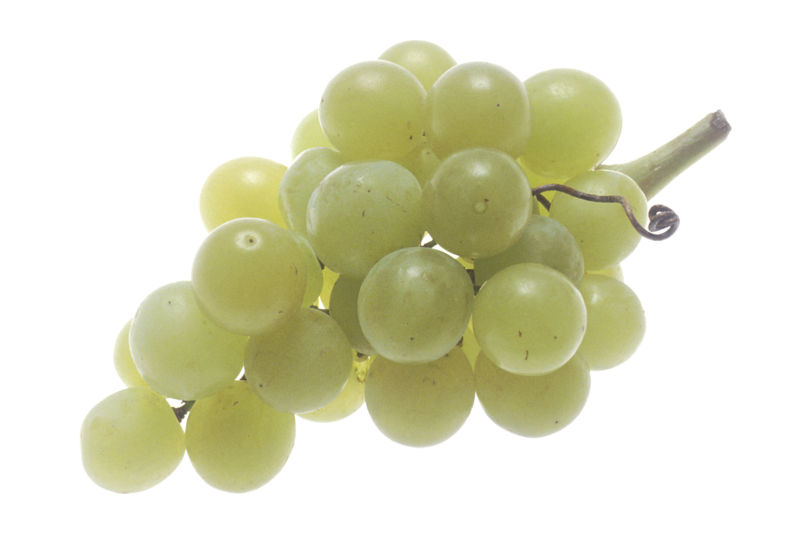 |
| Buy these organic if they're imported. image from Wikimedia Commons |
Dirty Dozen:
1. Apples
2. Celery
3. Strawberries
4. Peaches
5. Spinach
6. Nectarines (imported)
7. Grapes (imported)
8. Sweet bell peppers
9. Potatoes
10. Blueberries (domestic)
11. Lettuce
12. Kale/Collard greens
Now all these above items the EWG is recommending you buy organic whenever possible because these foods have been found to be contaminated with pesticides the most. Note that most of the produce tested is washed and peeled before tested to reflect the most likely amounts of pesticide in the food when people would eat it.
And yes, buying organic is more expensive. But I decided in the past couple of years it is worth it. If I could pay just a little more now and reduce my chances of health problems down the line, I'm going to do it. Americans are willing to spend a smaller percentage of their earnings on food compared to many other countries. I think I learned that from Michael Pollan. And that could be a whole other memo on it's own, but for now, I'll just say we should value our health more than that.
You'll notice that everything on the Dirty Dozen list is lacking a hard, inedible outside. This thinner skin allows chemicals to seep into the produce. If you wanted to extend your organic purchasing past this list, you could make a rule that organic could be skipped on anything that has a hard outer structure or at least an outside you don't eat, like a cantaloupe or a pineapple.
In fact, that leads me to....
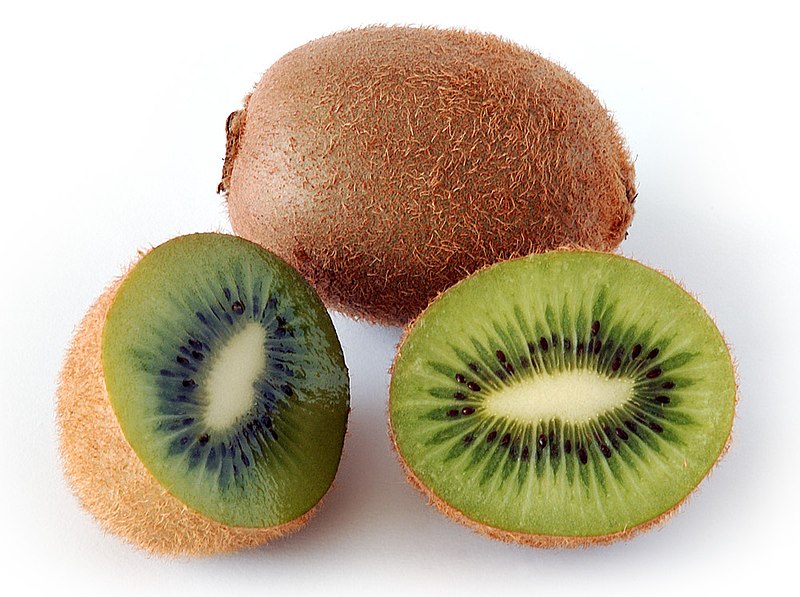 |
| These can be bought non-organic. image from Wikimedia Commons |
Clean Fifteen:
1. Onions
2. Corn
3. Pineapple
4. Avocado
5. Asparagus
6. Sweet Peas
7. Mango
8. Eggplant
9. Cantaloupe (domestic)
10. Kiwi
11. Cabbage
12. Watermelon
13. Sweet potatoes
14. Grapefruit
15. Mushrooms
These were all found to be lowest in pesticides. And yes, the order does have meaning - the top slots are for the worst offenders and best bets on their respective lists.
So there you go.
As I mentioned both lists are courtesy of the EWG and their research. Feel free to read the press release I mentioned. Visit the EWG Shopper's Guide website and you can even print out a guide to take with you shopping. That guide is in pdf form and has a QR code on it that you can scan with your smart phone to get the info on your phone.
©2011 Memo To My Health. Please do not republish our content without notifying us and getting permission.
Thursday, June 30, 2011
"Meatless Mondays" Meets 4th of July
Mark Bittman wrote an article that appeared yesterday in the NY Times regarding that the 4th of July is on a Monday this year and how it is often a holiday where meat is central to the food celebrations. Of course this conflicts with Johns Hopkins and Columbia University's schools of public health's "Meatless Mondays" campaign. It's an interesting take on American's pre-occupation with animal protein versus plant protein.
Read the entire article here: Tough Week for Meatless Monday
©2011 Memo To My Health. Please do not republish our content without notifying us and getting permission.
Read the entire article here: Tough Week for Meatless Monday
©2011 Memo To My Health. Please do not republish our content without notifying us and getting permission.
Tuesday, June 28, 2011
They Knocked Down the Food Pyramid
They knocked down the food pyramid with a plate.
In case you haven't heard already, the USDA has come out with a new food intake recommendation guide. The one I was familiar with came out in 1992. You can see it on the right. It sort of suggested carbo-loading, while telling us about how many servings a day we should have of different food groups. Of course we had no idea really how much constituted a serving of most foods, but I guess that was our problem. Plus, the pyramid would get really hard to read if they put all that info on there too.
I think it was Michael Pollan who said something to the effect of humans being the only beings who need to be told what to eat. It's true. I've never seen a food pyramid for bears. Maybe they're very secretive about it.
Apparently the USDA made renovations to the food pyramid in 2005. I don't know how I missed this, but I suspect if I did, a lot of other people missed it too. And how could we? All the food fell on the floor! And it got stairs (with a person climbing them who is ironically missing the most important part of your body to digest food)! The stairs and the person are all about adding physical activity to your daily life - which is admirable. Yellow is oils on there by the way. You may have noticed it does not have a label. And I read that the white at the top is discretionary calories, which I did not get from initially looking at it but maybe that's for the best.
And now it is a plate. The idea behind it being that being able to look at your own meal plate and see that the food is taking up those same proportions is more practical than knowing what the exact measurement of a portion is or even what 1 oz of broccoli looks like. Now the recommendations are 30% grains, 30% vegetables, 20% fruits, 20% protein. And then that smaller circle represents dairy.
The physical activity part fell off, but that's understandable since this guide is meant to be food-oriented. Apparently some people don't like that protein is its own category since you can get it from other categories. But I appreciate that the protein category is called protein instead of meat and beans. This can open the door to people accepting that protein does come from sources other than meat. And I like that fruits and vegetables are taking up half the plate. What's more, there's not even a junk food section! Of course people still have to stay open-minded to be adaptable. If you have a snack of grapes, you don't have to worry so much about filling the fruit part of your plate on the next meal. And of course your food doesn't have to be all sectioned out. You can easily mix those amounts into one dish.
This seems like a step in the right direction.
Choose My Plate has more information about this new guide along with tips about balancing calories, reducing certain foods, and increasing other foods.
©2011 Memo To My Health. Please do not republish our content without notifying us and getting permission.
 |
| image from Wikimedia & the USDA |
I think it was Michael Pollan who said something to the effect of humans being the only beings who need to be told what to eat. It's true. I've never seen a food pyramid for bears. Maybe they're very secretive about it.
 |
| image from Wikimedia Commons & the USDA |
 |
| image from Wikimedia & the USDA |
The physical activity part fell off, but that's understandable since this guide is meant to be food-oriented. Apparently some people don't like that protein is its own category since you can get it from other categories. But I appreciate that the protein category is called protein instead of meat and beans. This can open the door to people accepting that protein does come from sources other than meat. And I like that fruits and vegetables are taking up half the plate. What's more, there's not even a junk food section! Of course people still have to stay open-minded to be adaptable. If you have a snack of grapes, you don't have to worry so much about filling the fruit part of your plate on the next meal. And of course your food doesn't have to be all sectioned out. You can easily mix those amounts into one dish.
This seems like a step in the right direction.
Choose My Plate has more information about this new guide along with tips about balancing calories, reducing certain foods, and increasing other foods.
©2011 Memo To My Health. Please do not republish our content without notifying us and getting permission.
Friday, June 24, 2011
Jamie's Back... And Then He's Leaving Again
So Jamie Oliver's Food Revolution came back on the telly. You may remember the show was rescheduled after it'd already started the season. Well it came back on and even though I'd written about it, I still managed to miss it's return until I noticed it on Hulu. So I'm sure plenty of other people missed it too.
And now it's already the season finale tonight. I'm sure this post is going up too late to catch tonight's episode if you hadn't planned on it already, but that's ok. Head on over to Hulu and watch at your leisure. It's interesting because it's not the same pathway to progress as last season at all and that just highlights how you can't work on a nation's eating habits in one swoop. Every area has their own issues, challenges, and opinions. But the man is doing what he can.
The neat thing is you'll be hard pressed not to learn something from each episode. For example, I already knew eating food whose ingredient list is a slew of items you can't even pronounce tends not to be healthy, but watching Jamie teach a classroom of kids a lesson they'll never forget about those weird ingredients in ice cream (Episode 3 or 4 - I can't remember) I learned a bit more - a disgusting bit more, but still.
In Episode 4, Jamie teaches some kids about calories and here's another interesting tidbit from that:
If you eat junk food like this (in his example) all the time every day and have no physical activity, it can take girls only 2 months to put on 20 pounds, 4 months for guys to add on 30 lbs for guys.
Go watch it.
©2011 Memo To My Health. Please do not republish our content without notifying us and getting permission.
And now it's already the season finale tonight. I'm sure this post is going up too late to catch tonight's episode if you hadn't planned on it already, but that's ok. Head on over to Hulu and watch at your leisure. It's interesting because it's not the same pathway to progress as last season at all and that just highlights how you can't work on a nation's eating habits in one swoop. Every area has their own issues, challenges, and opinions. But the man is doing what he can.
The neat thing is you'll be hard pressed not to learn something from each episode. For example, I already knew eating food whose ingredient list is a slew of items you can't even pronounce tends not to be healthy, but watching Jamie teach a classroom of kids a lesson they'll never forget about those weird ingredients in ice cream (Episode 3 or 4 - I can't remember) I learned a bit more - a disgusting bit more, but still.
In Episode 4, Jamie teaches some kids about calories and here's another interesting tidbit from that:
If you eat junk food like this (in his example) all the time every day and have no physical activity, it can take girls only 2 months to put on 20 pounds, 4 months for guys to add on 30 lbs for guys.
Go watch it.
©2011 Memo To My Health. Please do not republish our content without notifying us and getting permission.
Tuesday, June 21, 2011
Oh Good, They Decided To Stop Feeding the Chickens Arsenic
The week before last an article appeared on the L.A. Times website entitled "Arsenic-containing drug in chicken feed to be pulled from U.S." and, as you can imagine, I had the reaction that became the title of this memo.
Now I already know that a lot of chickens people eat in the U.S. are given drugs. This is because they're often raised in conditions where they are tightly packed together so disease can spread easily. Oh, yes - it's also because they spend a good deal of their lives standing in their own feces. (The movie Food Inc. let me actually see this.) They're also given special things in their feed to help them fatten up fast (enter mental images of chickens so disproportional they can't walk properly if at all). The market needs big chickens now, darn it.
According to the Times, this particular drug being pulled off the market was for gaining weight and preventing an intestinal disease. And this drug had organic arsenic in it. They (FDA? drug maker?) found chickens who ate this feed ended up having more inorganic arsenic in their livers than chickens who did not. And the inorganic form is a known carcinogen for humans. Yet, the FDA stressed that the levels of inorganic are low, so eating chicken right now (as the drug is pulled off the market) does not pose a health risk.
Wait a minute. No health risk? I guess so, if you look at it as just eating one tiny-bit-poisoned chicken. But carcinogens/bad-for-us chemicals have this tendency to build up in our bodies as our bodies have a harder time flushing them out. So if you've eaten 25 bit-o-arsenic-fed chickens in the last year, is that considered a health risk? I have no idea. I hope for all our sakes it isn't. The trouble is that chicken was probably not your only source of a little bit of carcinogen in the past year. And we usually don't know or realize how much we might have in our systems.
The good news is with this FDA push, we hopefully won't have to deal with slightly-carcinogenic chicken. The thing that bothers me is even with all I knew, I didn't realize it was a factor in the first place. And so often, we don't even really know where our chickens are coming from, so we wouldn't know if their feed included this drug. It's kind of frustrating.
Read more: Arsenic-containing drug in chicken feed to be pulled from U.S.
©2011 Memo To My Health. Please do not republish our content without notifying us and getting permission.
Now I already know that a lot of chickens people eat in the U.S. are given drugs. This is because they're often raised in conditions where they are tightly packed together so disease can spread easily. Oh, yes - it's also because they spend a good deal of their lives standing in their own feces. (The movie Food Inc. let me actually see this.) They're also given special things in their feed to help them fatten up fast (enter mental images of chickens so disproportional they can't walk properly if at all). The market needs big chickens now, darn it.
According to the Times, this particular drug being pulled off the market was for gaining weight and preventing an intestinal disease. And this drug had organic arsenic in it. They (FDA? drug maker?) found chickens who ate this feed ended up having more inorganic arsenic in their livers than chickens who did not. And the inorganic form is a known carcinogen for humans. Yet, the FDA stressed that the levels of inorganic are low, so eating chicken right now (as the drug is pulled off the market) does not pose a health risk.
Wait a minute. No health risk? I guess so, if you look at it as just eating one tiny-bit-poisoned chicken. But carcinogens/bad-for-us chemicals have this tendency to build up in our bodies as our bodies have a harder time flushing them out. So if you've eaten 25 bit-o-arsenic-fed chickens in the last year, is that considered a health risk? I have no idea. I hope for all our sakes it isn't. The trouble is that chicken was probably not your only source of a little bit of carcinogen in the past year. And we usually don't know or realize how much we might have in our systems.
The good news is with this FDA push, we hopefully won't have to deal with slightly-carcinogenic chicken. The thing that bothers me is even with all I knew, I didn't realize it was a factor in the first place. And so often, we don't even really know where our chickens are coming from, so we wouldn't know if their feed included this drug. It's kind of frustrating.
Read more: Arsenic-containing drug in chicken feed to be pulled from U.S.
©2011 Memo To My Health. Please do not republish our content without notifying us and getting permission.
Thursday, June 16, 2011
A Second Addendum To the Raspberry Memo
Self,
Look at you. You bought organic blackberries. Apparently you're going through an excited organic berry phase. It's a little pricey, but that's ok because you've already learned from the raspberry debacle. Also not eating pesticides is a good thing. You ate those blackberries within 48 hours. Not a single one of them went bad before you ate them. I know we both realize this is such a small thing in the scope of life, but I'm proud of you. Gold star. Enjoy your Vitamin C, Manganese, & antioxidants. Go conquer the berry/aggregate fruit world.
Yours Truly, You
©2011 Memo To My Health. Please do not republish our content without notifying us and getting permission.
 |
| image from Wikimedia Commons |
Yours Truly, You
©2011 Memo To My Health. Please do not republish our content without notifying us and getting permission.
Tuesday, June 14, 2011
Be Aware: Muscles! - An Encore
In my previous post Be Aware: Muscles!, I mentioned being aware of what muscles you are using while exercising. Now let's take that one step further.
The other day I was speed walking and I stopped moving my arms while I walked. Instead I put my right hand on the left side of my abs to feel how that muscle grouping was moving. Then, keeping my hand there, I started swinging my left arm and hello commodore! The work in that small area had at least doubled. Now I know this is because my arm movement is giving greater cause for my abs to work to stabilize my core so I'm not flailing all over the place. But it was a cool reminder of how a simple movement can work out your body more. How easy is it when you're normal walking (aka not speed walking) to move your arms a little more?
You can't do this with every exercise, but this could also be a way for people who are less familiar with their muscles to create better awareness!
©2011 Memo To My Health. Please do not republish our content without notifying us and getting permission.
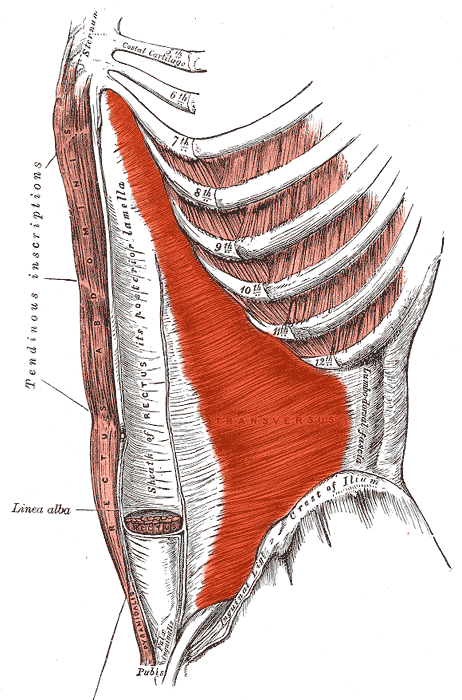 |
| Transversus Abdominis from Wikimedia Commons |
You can't do this with every exercise, but this could also be a way for people who are less familiar with their muscles to create better awareness!
©2011 Memo To My Health. Please do not republish our content without notifying us and getting permission.
Thursday, June 9, 2011
Be Aware: Muscles!
I think it was on one of my 10 Minute Solution DVDs, the instructor emphasized being aware of the muscle(s) upon which you are working. It was some time ago, but I remember trying it and thinking wow. Not only does it feel neat, but it helps you make sure you're doing an exercise correctly.
For example, if you're doing a back track with weights and you're not concentrating on lifting the weights using the muscles in your back, you may very well be just using your arms. I know. I know. Of course you have to use your arms to lift weights in this situation but the majority of the effort should be coming from your back. And friends, working your back is a good thing. It helps with your posture and when you have good posture, you usually feel better. Posture is also helpful when you're working out. Look at that. It all comes together.
As you may know, I like when there's even more science involved. The Cleveland Clinic's Lerner Research Institute has found preliminary evidence that muscles can be toned or strengthened through mental exertion. Now I am not recommending (and neither are they) that you just sit there and imagine working out instead of doing the real thing. Cleveland Clinic is looking at it as a possible way to help their cardiac rehabilitation program. By adding this concept to your regular exercise though you can further strengthen yourself. And when you feel strong you improve your well-feeling.
Now I'm not sure how easy it is for the average person to just start being aware of their muscles if they've never done it before. I spent 20+ years in dance training so I have a certain familiarity with my muscles already. Because of that, I'm also not sure why it took an exercise video to really get me to do this on a regular basis. But there you have it.
Read more:
Cleveland Clinic Mental Exercise
From mental power to muscle power--gaining strength by using the mind Abstract
©2011 Memo To My Health. Please do not republish our content without notifying us and getting permission.
 |
| Lumbar Triangle from Wikimedia Commons |
As you may know, I like when there's even more science involved. The Cleveland Clinic's Lerner Research Institute has found preliminary evidence that muscles can be toned or strengthened through mental exertion. Now I am not recommending (and neither are they) that you just sit there and imagine working out instead of doing the real thing. Cleveland Clinic is looking at it as a possible way to help their cardiac rehabilitation program. By adding this concept to your regular exercise though you can further strengthen yourself. And when you feel strong you improve your well-feeling.
Now I'm not sure how easy it is for the average person to just start being aware of their muscles if they've never done it before. I spent 20+ years in dance training so I have a certain familiarity with my muscles already. Because of that, I'm also not sure why it took an exercise video to really get me to do this on a regular basis. But there you have it.
Read more:
Cleveland Clinic Mental Exercise
From mental power to muscle power--gaining strength by using the mind Abstract
©2011 Memo To My Health. Please do not republish our content without notifying us and getting permission.
Tuesday, June 7, 2011
An Addendum to the Memo on Raspberries
 |
| Image from Wikimedia Commons |
Remember when you bought those organic raspberries you sprang for organic blueberries too? The blueberries were a good buy. They lasted much longer than the raspberries. You were even able to enjoy them a whole week. They might have lasted a day or two longer but they were yummy. Feel free to do that again.
Sigh. Remember when you didn't even really like blueberries? You wouldn't even eat them in muffins. But that's a whole other memo... We're almost getting this how often and how much scenario for fresh foods down to a science. Remember the blueberries.
Sincerely, Me
©2011 Memo To My Health. Please do not republish our content without notifying us and getting permission.
Tuesday, May 31, 2011
A Memo on Raspberries
Dear self,
In the future when you decide to splurge on organic raspberries, eat them within the 24 hours after you buy them. Consider even eating them right after you buy them. You don't want to relive the great mold disappointment again.
Love,
Me
In the future when you decide to splurge on organic raspberries, eat them within the 24 hours after you buy them. Consider even eating them right after you buy them. You don't want to relive the great mold disappointment again.
Love,
Me
Tuesday, May 24, 2011
Exercise Quick Tip: Music Video Challenge
 |
| image from Wisconsin Historical Images on Flickr |
Put on a song with a great beat and just start moving around. You'll be burning calories, working off any stress, and having some fun.
For an extra challenge, find a music video online and try to follow the moves. Go ahead, you know you want to put on Thriller.
Tuesday, May 17, 2011
Exercise: Taking It Home
Way back in January I wrote about how it can be confusing with all the information out there to know how much time should be spent exercising. And I spoke of how just even ten minutes makes me feel better. Well it's not just the quantity of time working out that matters. It's what you do with that time. Of course ten minutes of running will probably give you a better cardiovascular work out than ten minutes of slow crunches, but, dependent on your running posture, the crunches will probably have a greater effect on toning your abs than the running.
There are so many other options for exercise besides running and crunches though. If you like machines, most gyms have a bevy of options right there. I get bored on machines though - yes, even if there's a TV on in front of it. I actually am not a real big fan of going to the gym. Someone was kind enough to bring me on a guest pass to a very nice one recently. I enjoyed the class we took there and having lots of equipment ready-at-hand. Yet the idea of circling the parking lot looking for a spot because the time you can go to the gym is the same time 200 other people have available is not my idea of revving myself up for a good workout. I'm also not a fan of getting all sweaty and then having to bundle up to go to the car when its cold outside.
So, as you may have guessed by now, working out at home is my preference for my dedicated exercise time. Joining a gym is not out of question for the future but right now exercise videos are my prime (but not only) guidance. You can do them whenever you're ready. No parking lots. No waiting. No having to be seen by other people while you work out - if you want.
My go-to DVD series is The 10-Minute Solution. Each DVD has 5 ten-minute workouts to chose from that go with whatever the theme is for that particular DVD. But the best part is, they have a menu built in so you can chose however many of the 5 you want to do and what order you want to do them in. This lets you mix it up and not have to do everything in the same order every time. Also, if you have several of the DVDs you can do something like focus on just your arms one day and do all the arm exercises from several different approaches. It's important to let your muscles recover by not intensely focusing on the same area two days in a row.
I'll talk more about specific exercise DVDs in the future, but for now I'll leave you with this tip. Nervous about investing in an exercise program and finding out you don't really like it? Try before you buy. Check your local library. There's also exercise DVDs available from Netflix (although the selection seems to come and go).
©2011 Memo To My Health. Please do not republish our content without notifying us and getting permission.
There are so many other options for exercise besides running and crunches though. If you like machines, most gyms have a bevy of options right there. I get bored on machines though - yes, even if there's a TV on in front of it. I actually am not a real big fan of going to the gym. Someone was kind enough to bring me on a guest pass to a very nice one recently. I enjoyed the class we took there and having lots of equipment ready-at-hand. Yet the idea of circling the parking lot looking for a spot because the time you can go to the gym is the same time 200 other people have available is not my idea of revving myself up for a good workout. I'm also not a fan of getting all sweaty and then having to bundle up to go to the car when its cold outside.
 |
| image from Koisny on Flickr |
So, as you may have guessed by now, working out at home is my preference for my dedicated exercise time. Joining a gym is not out of question for the future but right now exercise videos are my prime (but not only) guidance. You can do them whenever you're ready. No parking lots. No waiting. No having to be seen by other people while you work out - if you want.
My go-to DVD series is The 10-Minute Solution. Each DVD has 5 ten-minute workouts to chose from that go with whatever the theme is for that particular DVD. But the best part is, they have a menu built in so you can chose however many of the 5 you want to do and what order you want to do them in. This lets you mix it up and not have to do everything in the same order every time. Also, if you have several of the DVDs you can do something like focus on just your arms one day and do all the arm exercises from several different approaches. It's important to let your muscles recover by not intensely focusing on the same area two days in a row.
I'll talk more about specific exercise DVDs in the future, but for now I'll leave you with this tip. Nervous about investing in an exercise program and finding out you don't really like it? Try before you buy. Check your local library. There's also exercise DVDs available from Netflix (although the selection seems to come and go).
©2011 Memo To My Health. Please do not republish our content without notifying us and getting permission.
Tuesday, May 10, 2011
The Many Ingredients of a Twinkie
Way back when in my post about Michael Pollan's "Eat Food. Not Too Much. Mostly Plants." mantra, I mentioned the idea of staying away from foods with more than five ingredients. That's much harder to do when you're eating highly processed foods (which is the point). That way you tend to me avoiding chemicals and getting real, whole nutrients. Plus, as mentioned in Process Food Land: Adventures in More Questionable Marketing, when you're eating processed food you have to look out for things like products that appear to have blueberries in them until you read the label and find out your eating a piece of blue-dyed starch.
When it comes to Twinkies though, both these concepts get yanked even further. There's no way you're expecting to eat any real whole food when you eat a Twinkie (which, by the way, I haven't done in at least 15 years). They're made without any real dairy products that could spoil quickly. According to a 75th anniversary of the Twinkie article in The Washington Post, "Twinkies are basically flour, sugar (three kinds of it), oil, eggs and chemicals (mainly preservatives and stabilizers)."
So why this Twinkie interest all of a sudden? Through the website Good.is, I discovered Dwight Eschliman's 37 or So Ingredients - a project in which Eschliman photographed various Twinkie ingredients. I previously didn't even know what some of these ingredients would look like. According to Good, his mom kept him away from processed food, meat and dairy. When he got older though he discovered foods like the Twinkie, but by the time he had kids of his own, found his skepticism of these kinds of foods renewed.
Feel free to check the project out as see what a lump of animal shortening looks like. Yeah, that's right... a Twinkie's not necessarily vegetarian.
©2011 Memo To My Health. Please do not republish our written content without notifying us and getting permission.
When it comes to Twinkies though, both these concepts get yanked even further. There's no way you're expecting to eat any real whole food when you eat a Twinkie (which, by the way, I haven't done in at least 15 years). They're made without any real dairy products that could spoil quickly. According to a 75th anniversary of the Twinkie article in The Washington Post, "Twinkies are basically flour, sugar (three kinds of it), oil, eggs and chemicals (mainly preservatives and stabilizers)."
 |
| FD&C Yellow #5 from Dwight Eschliman's 37 or Ingredients |
Feel free to check the project out as see what a lump of animal shortening looks like. Yeah, that's right... a Twinkie's not necessarily vegetarian.
©2011 Memo To My Health. Please do not republish our written content without notifying us and getting permission.
Tuesday, May 3, 2011
Jamie Oliver Rescheduled
If you're looking for Jamie Oliver's Food Revolution tonight you're going to have a hard time finding a new episode. ABC has suddenly decided to push the rest of the season off until sweeps are over. So the next episode won't air until June 3rd. At least they'll air them...
©2011 Memo To My Health. Please do not republish our content without notifying us and getting permission.
©2011 Memo To My Health. Please do not republish our content without notifying us and getting permission.
Food Rut
While I know people who can enjoy eating the same thing every day, I am definitely not one of those people. Well. Scratch that. Partially. Once upon a time I made myself a quesadilla every other day. But that was pretty much the exception. That was also before I realized I felt even better practically eliminating dairy from my diet than just limiting it.
Anyway, here I am, feeling like I'm stuck in a food rut. I guess if you had to put a label on my current eating behaviors it'd be vegetarian with days of intermittent veganism and pecestarianism but will eat other meats if they are put in front of her and her choices are limited. I feel like I keep defaulting to the same vegetables for dinner though - bell peppers, onion, mushroom - sautéed on the stovetop.
Put them with black beans, avocado and tomato (I know, still not quite in season) in a whole wheat or multigrain tortilla and you have vegetarian fajitas. Put them over whole wheat or spinach pasta with some olive oil and you have a pasta dish. Spread some pesto and olive oil on a whole wheat pizza crust, add some artichoke or olive and you have a veggie pizza (cheese optional). These are just a couple of my recent food escapades (which I can put up here in recipe form if there's interest), but I still feel like I need to shake things up.
Sometimes looking for recipes in the bigger and well-known recipe repertoires online get discouraging. You can often find a lot of meat and a lot of dairy use. I already know plenty of recipes like that. Luckily I'm currently reading The Okinawa Program (a review will appear on the blog once I'm finished). I knew there were recipes featured in the back of the book and I knew I was interested in the east-west diet blend, so I flipped ahead and started reading them. And voila. I got excited about a lot of them and will be trying at least one this week.
Sorry internet, books win this round.
©2011 Memo To My Health. Please do not republish our content without notifying us and getting permission.
 |
| onion image from nikkorsnapper on flickr |
Put them with black beans, avocado and tomato (I know, still not quite in season) in a whole wheat or multigrain tortilla and you have vegetarian fajitas. Put them over whole wheat or spinach pasta with some olive oil and you have a pasta dish. Spread some pesto and olive oil on a whole wheat pizza crust, add some artichoke or olive and you have a veggie pizza (cheese optional). These are just a couple of my recent food escapades (which I can put up here in recipe form if there's interest), but I still feel like I need to shake things up.
Sometimes looking for recipes in the bigger and well-known recipe repertoires online get discouraging. You can often find a lot of meat and a lot of dairy use. I already know plenty of recipes like that. Luckily I'm currently reading The Okinawa Program (a review will appear on the blog once I'm finished). I knew there were recipes featured in the back of the book and I knew I was interested in the east-west diet blend, so I flipped ahead and started reading them. And voila. I got excited about a lot of them and will be trying at least one this week.
Sorry internet, books win this round.
©2011 Memo To My Health. Please do not republish our content without notifying us and getting permission.
Wednesday, April 27, 2011
Heart-Warming Frustration: A Review of the First Two Episodes of Jamie Oliver's Food Revolution
The first two episodes of Jamie Oliver's Food Revolution in Los Angeles have aired. (There was no episode on yesterday so now is your chance to make sure you're all caught up!) If you've missed them, head on over to Hulu to check it out.
Episode 1: Maybe L.A. Was A Big Mistake
Episode 2: I Think I Found A Loophole
While Jamie may be banned from the schools, he still wants to help. So he's finding whatever ways he can to see the food, talk to the kids and motivate their parents to act. You'd be hard-pressed to watch this show and not learn a single thing.
I, for one, had no idea about the gross practices allowed in the making of ground beef. I'm not going to go into it here; Jamie will show you what I'm talking about. But let's just say if you ever plan on eating ground beef, you should know this.
Since his hands are sort of tied in the school venue, Jamie is trying to make a difference elsewhere too. He's taken it upon himself to try to make the menu of a family-owned fast food restaurant healthier for its customers without driving up the price too high. This story line especially is a microcosm for so many people's eating situations. They want to eat healthier but they have these preconceived notions that are so ingrained they're really hard to leave behind.
While there was no episode, last night the L.A. USD superintendent announced with Jamie Oliver on Jimmy Kimmel's show that they will be no longer offering chocolate- or strawberry-flavored milk in their schools starting this fall. Those milks are high in sugar. In fact, in Episode 1 Jamie showed just how much sugar there is.
So give it a whirl Tuesday nights 8pm ET/ 7pm CT on ABC, but be prepared to be both frustrated and encouraged by one person (and his team) trying to make a difference.
©2011 Memo To My Health. Please do not republish our content without notifying us and getting permission.
Episode 1: Maybe L.A. Was A Big Mistake
Episode 2: I Think I Found A Loophole
While Jamie may be banned from the schools, he still wants to help. So he's finding whatever ways he can to see the food, talk to the kids and motivate their parents to act. You'd be hard-pressed to watch this show and not learn a single thing.
I, for one, had no idea about the gross practices allowed in the making of ground beef. I'm not going to go into it here; Jamie will show you what I'm talking about. But let's just say if you ever plan on eating ground beef, you should know this.
 |
| Burger from Wikimedia Commons |
While there was no episode, last night the L.A. USD superintendent announced with Jamie Oliver on Jimmy Kimmel's show that they will be no longer offering chocolate- or strawberry-flavored milk in their schools starting this fall. Those milks are high in sugar. In fact, in Episode 1 Jamie showed just how much sugar there is.
So give it a whirl Tuesday nights 8pm ET/ 7pm CT on ABC, but be prepared to be both frustrated and encouraged by one person (and his team) trying to make a difference.
©2011 Memo To My Health. Please do not republish our content without notifying us and getting permission.
Monday, April 11, 2011
Jamie Oliver's Food Revolution
I meant to write this post about a year ago.
Last spring, Jamie Oliver's Food Revolution premiered on TV. I watched the whole series (all 6 episodes). I smiled. I cried. I decried that it was on Friday nights - when a lot of people were probably not watching it...
Jamie, also known as The Naked Chef, went to Huntington, WV - a place statistically known as one of the unhealthiest places in America. It was moving to watch him try to teach people about healthy eating habits in an attempt to decrease incidences of obesity, heart disease and diabetes when so many wouldn't even listen to him at first. You see apparently Americans don't want to be told what to do - especially by a British guy.
As he went to work understanding and trying to change school lunch programs, he revealed lots of bureaucracy, ridiculous guidelines, but also opportunity for change. There were plenty of poignant moments - like the time he went into a grade school classroom and asked the kids to identify some foods. They knew what pizza and fries were but had no idea on most vegetables. Their mortified teacher made it her mission to teach them about fruits and vegetables so when Jamie returned, they impressed him with their new knowledge.
The whole mission was a fight but he was able to make changes to the school food programs that they still have in place today. He also taught the children, their parents, and other members of the community how to make simple, but healthy dishes instead of relying on fast food when they needed a meal in short time.
Now the show is coming back. Tuesday (April 12th) 8pm ET/7pm CT, Jamie Oliver's Food Revolution premieres its second season on ABC. This time he's working in Los Angeles and he faces the addition hurdle of being banned from the schools before he event gets there.
I'm looking forward to it.
Learn more on Jamie Oliver's website.
©2011 Memo To My Health. Please do not republish our content without notifying us and getting permission.
Last spring, Jamie Oliver's Food Revolution premiered on TV. I watched the whole series (all 6 episodes). I smiled. I cried. I decried that it was on Friday nights - when a lot of people were probably not watching it...
 |
| Season 1 Poster from Wikipedia |
Jamie, also known as The Naked Chef, went to Huntington, WV - a place statistically known as one of the unhealthiest places in America. It was moving to watch him try to teach people about healthy eating habits in an attempt to decrease incidences of obesity, heart disease and diabetes when so many wouldn't even listen to him at first. You see apparently Americans don't want to be told what to do - especially by a British guy.
As he went to work understanding and trying to change school lunch programs, he revealed lots of bureaucracy, ridiculous guidelines, but also opportunity for change. There were plenty of poignant moments - like the time he went into a grade school classroom and asked the kids to identify some foods. They knew what pizza and fries were but had no idea on most vegetables. Their mortified teacher made it her mission to teach them about fruits and vegetables so when Jamie returned, they impressed him with their new knowledge.
The whole mission was a fight but he was able to make changes to the school food programs that they still have in place today. He also taught the children, their parents, and other members of the community how to make simple, but healthy dishes instead of relying on fast food when they needed a meal in short time.
Now the show is coming back. Tuesday (April 12th) 8pm ET/7pm CT, Jamie Oliver's Food Revolution premieres its second season on ABC. This time he's working in Los Angeles and he faces the addition hurdle of being banned from the schools before he event gets there.
I'm looking forward to it.
Learn more on Jamie Oliver's website.
©2011 Memo To My Health. Please do not republish our content without notifying us and getting permission.
Monday, March 21, 2011
Alicia Silverstone Explains the Soy Situation
Ah, the soy situation. I know soy has good properties but there's the idea out there that too much of it can be bad for you - which is even further complicated by not knowing how much is too much. I mentioned my uncertainty back in the Non-Fish Omega-3 Sources post and even further back in my review of The Kind Diet. But I know it's something I already include in my diet in forms such as edamame, the occasional pieces of tofu and the once-in-awhile scoop of soy-based ice cream. (There's more but you get the point.) Soy is a rich source of protein, fiber, and... no-surprise-see-link-above omega-3 fatty acids.
Well Alicia Silverstone - yes, the same one who in my review of her book I said confused me on the soy situation - cleared things up a bit.
Basically she's saying that phytoestrogen (which is different than the estrogen you find in dairy products) in soy (especially organic soybeans) can help regulate our own hormone levels. But the soy you should really moderate is the heavily processed soy... like my aforementioned soy ice cream. According to her post, this is because there is some evidence suggesting this highly concentrated form of the protein can produce an insulin-like growth factor in the bloodstream linked to high cancer risk.
Ok. So I still don't know quite how much soy is too much, but now I have an idea of which soy is helpful and which I should have small amounts of, if any.
The strange thing is I knew this already. Processed foods tend to not be as nutritious and/or have elements that can harm your health in the long run. But it took Alicia Silverstone bringing up the issue for me to realize this applies to soy too.
Her post also mentions 5 soymilk alternatives (nut, rice, oat, hemp, coconut). Cow's milk has never been a staple of my diet due to intolerance so I was never in the mindset that I had to replace it with soymilk. Pretty much the only time I use a milk of any kind is if I have to when I'm baking and when I make smoothies, but in both cases I use almond milk because almonds are good for you (helps lower bad cholesterol, Vitamin E source, and more), I can tolerate it, I don't mind the taste, and it can be gluten-free. Also it helps make smoothies a bit creamier.
Now I also know soy has issues all on its own in regards to farming subsidies, but as far as health goes (which is the main concern of this blog) - going for whole/non-highly-processed, organic-when-possible soy sources can be a helpful part of your diet.
And if you haven't tried edamame yet, do it. (It's on the good soy list.) Simple. Yummy. Great snack, appetizer, or side.
Well. I'm feeling better on this issue.
If you want to read the whole Alicia Silverstone post, you can find it on her blog with a title of "the deal with soy... and five soymilk alternatives."
Well Alicia Silverstone - yes, the same one who in my review of her book I said confused me on the soy situation - cleared things up a bit.
 |
| edamame image from Food Thinkers on Flickr |
Ok. So I still don't know quite how much soy is too much, but now I have an idea of which soy is helpful and which I should have small amounts of, if any.
The strange thing is I knew this already. Processed foods tend to not be as nutritious and/or have elements that can harm your health in the long run. But it took Alicia Silverstone bringing up the issue for me to realize this applies to soy too.
Her post also mentions 5 soymilk alternatives (nut, rice, oat, hemp, coconut). Cow's milk has never been a staple of my diet due to intolerance so I was never in the mindset that I had to replace it with soymilk. Pretty much the only time I use a milk of any kind is if I have to when I'm baking and when I make smoothies, but in both cases I use almond milk because almonds are good for you (helps lower bad cholesterol, Vitamin E source, and more), I can tolerate it, I don't mind the taste, and it can be gluten-free. Also it helps make smoothies a bit creamier.
Now I also know soy has issues all on its own in regards to farming subsidies, but as far as health goes (which is the main concern of this blog) - going for whole/non-highly-processed, organic-when-possible soy sources can be a helpful part of your diet.
And if you haven't tried edamame yet, do it. (It's on the good soy list.) Simple. Yummy. Great snack, appetizer, or side.
Well. I'm feeling better on this issue.
If you want to read the whole Alicia Silverstone post, you can find it on her blog with a title of "the deal with soy... and five soymilk alternatives."
©2011 Memo To My Health. Please do not republish our content without notifying us and getting permission.
Monday, March 14, 2011
Chips/Crisps: You Cannot Eat Just One
I'm pretty sure that's scientifically proven. Pretty sure. ;)
Even with everything I've learned I've been unable to completely walk away from the chip.
I know potato chips are not the healthiest food. I try not to buy them too often and when I do I go for what I think are the more natural (and hopefully healthier) options. They all still have fat and usually saturated fat too. (Saturated fats raise total cholesterol and LDL cholesterol (the bad one). The AHA recommends limited saturated fat intake to less than 7% of calories a day.) I know this and yet in the last year at least once I ate a family-size bag in less than a week. It's that same salt/fat combo that makes people want to eat more and more fast food and is so so so not good for you. I can stay away from fast food though.
It's not just the nutritional content that can be problematic though; it's the overeating. See the aforementioned family-size bag. The other day I stumbled upon an article on NPR's Shots blog: "The Naked Truth About the Chip Aisle." It made me realize I have never had just one chip (or crisp, dependent on which country I'm in) and then closed up the bag and put them away. You eat one. And without even thinking you hand is back in the bag. Suddenly you're stuffed, your greasy and/or salty hand is sweeping for any remaining fragments and you're not even totally sure how it happened.
In my case, I then try to appease myself with the thought that I could have bought less healthy chips.
This article though brought up a point I hadn't even considered... that those premium, "natural" chips could have more fat per serving than Pringles. Crap. I've fallen for the allure of the naturally formed chip that doesn't stack neatly in a tube. They say in the article that comparing the salt, fat, and calorie count on the fly in the grocery store is overwhelming. While I wouldn't call it that, I know it is time consuming. I've taken several minutes in the aisle before comparing bags to find the least unhealthy of the options in front of me.
Enter HealthCastle.com, a nutrition website run by dietitians (and introduced to me by the article). They compare foods and have a handy chip review tool. Of course it doesn't have every kind of chip out there, but I definitely found ones I recognized and had bought before in the 40 listed. You can go see if your preferred chips are on the list, make some comparisons, and decide where to go from there. And remember to multiply the calories/salt/fat since you're liable to eat more than one serving size in a sitting.
You can also read the Shots blog article if you'd like.
I'm going to go definitely put chips on the only-eat-sometimes food list... in marker.
©2011 Memo To My Health. Please do not republish our content without notifying us and getting permission.
Even with everything I've learned I've been unable to completely walk away from the chip.
I know potato chips are not the healthiest food. I try not to buy them too often and when I do I go for what I think are the more natural (and hopefully healthier) options. They all still have fat and usually saturated fat too. (Saturated fats raise total cholesterol and LDL cholesterol (the bad one). The AHA recommends limited saturated fat intake to less than 7% of calories a day.) I know this and yet in the last year at least once I ate a family-size bag in less than a week. It's that same salt/fat combo that makes people want to eat more and more fast food and is so so so not good for you. I can stay away from fast food though.
It's not just the nutritional content that can be problematic though; it's the overeating. See the aforementioned family-size bag. The other day I stumbled upon an article on NPR's Shots blog: "The Naked Truth About the Chip Aisle." It made me realize I have never had just one chip (or crisp, dependent on which country I'm in) and then closed up the bag and put them away. You eat one. And without even thinking you hand is back in the bag. Suddenly you're stuffed, your greasy and/or salty hand is sweeping for any remaining fragments and you're not even totally sure how it happened.
In my case, I then try to appease myself with the thought that I could have bought less healthy chips.
 |
| image from Roadsidepictures on Flickr |
Enter HealthCastle.com, a nutrition website run by dietitians (and introduced to me by the article). They compare foods and have a handy chip review tool. Of course it doesn't have every kind of chip out there, but I definitely found ones I recognized and had bought before in the 40 listed. You can go see if your preferred chips are on the list, make some comparisons, and decide where to go from there. And remember to multiply the calories/salt/fat since you're liable to eat more than one serving size in a sitting.
You can also read the Shots blog article if you'd like.
I'm going to go definitely put chips on the only-eat-sometimes food list... in marker.
©2011 Memo To My Health. Please do not republish our content without notifying us and getting permission.
Saturday, March 5, 2011
Conscious Eating & Oprah's Vegan Challenge
Ok. I still haven't seen all of the Oprah's Vegan Challenge episode, but... I have managed to see about ten minutes of clips that people have shared online. It's not enough to really make an assessment of the whole adventure, but there were some interesting points.
Oprah had Michael Pollan on as a guest - which seemed like an interestingly odd choice because Michael Pollan is not a vegan. He is a food guy though. And I have to credit his writing with giving me that last big push to become a definitively more conscious shopper and eater. From what I saw, I think that was his role for this Oprah show too - to help the audience understand what it means to be aware of what you're eating and why it is important. He pointed out that their week-long vegan challenge would really help force them all to think about how much animal product is in their daily diets.
I think it'd be beneficial for everyone to really take a good look at how much of everything is in their diet - not just animal products. But taking an element at a time will empower you to make your own decision as to whether or not you feel like maybe there is too much or not enough of that element in your current diet. And then you can take action to make a change for your overall health.
Pollan admitted that he does eat meat a few times a week but he makes a point not to eat feedlot/industrial meats. If you read his book, The Omnivore's Dilemma, you can learn more about what he means by that and how he came to that decision. But I can tell you right now that it means if he's eating fish, it's wild. If he's eating chicken, it was truly free-range and it ate what chickens are naturally supposed to eat... and so on.
The clips I watched also included a few moments with staffers and their thoughts on this vegan challenge. Some were not thrilled but one said she thought she could be vegan two or three days a week easily. And that's something I've been talking with people about lately - unless you are making sure you eat meat at every meal, you could easily consume a vegetarian or vegan meal and not even realize it. That's because many people aren't raised to frame their meals that way.
I also wondered - What if everything that was technically vegan was labeled so? Many vegan packaged food products have a small symbol somewhere near the nutritional information. But what if absolutely everything that was vegan was largely and clearly marked so? Would people turned off by the idea of veganism move away from those foods/products - even if they were foods/products they had liked? Would some people automatically assume it meant they were eating healthy?
Because that's another important key - vegan does not necessarily mean healthy. It can, but it doesn't have to. The classic example is Coca Cola. Yes, Coca Cola is technically vegan. Yet I think we all know soda is not the healthiest drink available. It has 170 calories in a 8oz bottle. Then there's the highly processed high fructose corn syrup and the caffeine. The point is you could consume a technically vegan diet and still feel crappy from eating tons of sugar or sluggish after coming down off of a caffeine jolt. You could still become overweight from consistently consuming way more calories than you burn.
The thinking is that vegans have to be more conscious of what they eat because mainstream food isn't always vegan-friendly. And conscious is a good step but it's not an instant fix. As Michael Pollan put it on Oprah's show, people are eating "too many calories, too much processed food, tons of refined carbohydrates..." (Refined carbohydrates would include white flour, sugar, and soda.)
So here's where I encountered a huge disconnect. This is the shopping list posted on the show's website.
The vegetable and fruit section is the smallest section on the whole list! And almost the whole first page is processed "replacement foods"... aka fake meat, fake cheese, fake mayonnaise... aka highly processed foods. If you eat meat at least twice a day, every day, but now it's fake meat... is that really mounds better for you? Aren't you now eating a bunch of preservatives and possibly dyes and other chemicals?
Again, I did not see the whole episode. But between what I saw and this list, I'm not sure viewers got the full message about eating healthy because so much attention was paid to associating veganism with processed foods.
©2011 Memo To My Health. Please do not republish our content without notifying us and getting permission.
 |
| Image from Ex-Smith on Flickr |
I think it'd be beneficial for everyone to really take a good look at how much of everything is in their diet - not just animal products. But taking an element at a time will empower you to make your own decision as to whether or not you feel like maybe there is too much or not enough of that element in your current diet. And then you can take action to make a change for your overall health.
Pollan admitted that he does eat meat a few times a week but he makes a point not to eat feedlot/industrial meats. If you read his book, The Omnivore's Dilemma, you can learn more about what he means by that and how he came to that decision. But I can tell you right now that it means if he's eating fish, it's wild. If he's eating chicken, it was truly free-range and it ate what chickens are naturally supposed to eat... and so on.
The clips I watched also included a few moments with staffers and their thoughts on this vegan challenge. Some were not thrilled but one said she thought she could be vegan two or three days a week easily. And that's something I've been talking with people about lately - unless you are making sure you eat meat at every meal, you could easily consume a vegetarian or vegan meal and not even realize it. That's because many people aren't raised to frame their meals that way.
 |
| Image by karimian on Flickr |
Because that's another important key - vegan does not necessarily mean healthy. It can, but it doesn't have to. The classic example is Coca Cola. Yes, Coca Cola is technically vegan. Yet I think we all know soda is not the healthiest drink available. It has 170 calories in a 8oz bottle. Then there's the highly processed high fructose corn syrup and the caffeine. The point is you could consume a technically vegan diet and still feel crappy from eating tons of sugar or sluggish after coming down off of a caffeine jolt. You could still become overweight from consistently consuming way more calories than you burn.
The thinking is that vegans have to be more conscious of what they eat because mainstream food isn't always vegan-friendly. And conscious is a good step but it's not an instant fix. As Michael Pollan put it on Oprah's show, people are eating "too many calories, too much processed food, tons of refined carbohydrates..." (Refined carbohydrates would include white flour, sugar, and soda.)
So here's where I encountered a huge disconnect. This is the shopping list posted on the show's website.
The vegetable and fruit section is the smallest section on the whole list! And almost the whole first page is processed "replacement foods"... aka fake meat, fake cheese, fake mayonnaise... aka highly processed foods. If you eat meat at least twice a day, every day, but now it's fake meat... is that really mounds better for you? Aren't you now eating a bunch of preservatives and possibly dyes and other chemicals?
Again, I did not see the whole episode. But between what I saw and this list, I'm not sure viewers got the full message about eating healthy because so much attention was paid to associating veganism with processed foods.
©2011 Memo To My Health. Please do not republish our content without notifying us and getting permission.
Saturday, February 26, 2011
Non-Fish Sources of Omega-3 Fatty Acids
All the way back in January of last year I briefly mentioned Omega-3 fatty acids in my Sustainable Seafood: Salmon post. Well Elle is not a fish fan. And I just haven't eaten much fish in recent months. (The American Heart Association recommends eating fish twice a week.) Our bodies can't make Omega-3 on their own so for Elle, sometimes for me, and for anyone else who doesn't eat fish, here are some other sources of this essential nutrient that plays a role in brain function, reduces inflammation and may lower heart disease risk.
Flax Seeds
 |
| photo from digiyesica on flickr |
This one is a bit more straight forward. Step one: buy them. Step two: eat them.
This one works fine on its own but of course you can add them to salads or muffins or what not. A quarter cup is a good amount.
Soybeans
Here at Memo to My Health we're still not completely clear ourselves as to how much soy is good to have in your diet and where the boundary is for potentially affecting hormones, but soybeans are a source of ALA (alpha-linolenic acid), a Omega-3 fat that the body can convert into other Omega-3s it may need. ALA is also the source of the Omega-3 in walnuts and flax seeds. The compounds in cold-water fish for Omega-3 are EPA and DHA. 1 cup of soybeans can be an adequate source of Omega-3.
Supplements
There's still so much we don't understand about how we get certain nutrients from foods and all the roles the combination of elements in whole foods play, so it's probably your best bet to get your Omega-3 from a food source. But if you can't or aren't getting enough, you can discuss with your doctor taking a supplement and what quantity is right for you.
Now the issues with the pills are 1) many are from fish (which may or may not bother you) and 2) a lot of people taking them end up burping a "fishy" taste all day. I've been told that if you buy a high-quality supplement the burping doesn't occur very often.
I recently got a chance to sample the liquid Total Omega from Barlean's Omega Swirl line at a local health-food store. It was fish-oil-based but I did not experience any fishy-taste or burping in the hours after taking it. In fact, it was orange cream-flavored and was yummy enough that I could see someone getting carried away and taking too much of it. On the flip side, if you go this route, you definitely won't dread taking this daily... unless you hate the taste of orange creamsicals. Barlean's does offer other options though. I can't vouch for their taste because I'd already had my dose of the day in my sample, but in fish-based oils they also have lemon zest, mango peach, and pina colada. What's more, they have three vegetarian Omega-3 options and one vegan Omega-3 liquid. I plan to read more about it and consider it as a possibility for times when I'm not getting my Omega-3s elsewhere.
All of the quantity recommendations for the foods in this post came from The George Mateljan Foundation. You can read more about which medical conditions there is clinical evidence that Omega-3s ameliorate as well as precautions at The University of Maryland Medical Center. And see answers to some common questions about Omega-3s (the good fat) at The Harvard School of Public Health.
©2011 Memo To My Health. Please do not republish our content without notifying us and getting permission.
Subscribe to:
Posts (Atom)